Image showing artisan chisel carving letters CTW into wood

Let's get the conversation started

    Open: 09:00 – 17:00

    Garages & Workshops Get in touch c

    Bespoke Timber Garages & Workshops — London & Cambridge

    A great garage or workshop does more than shelter a car or tools — it protects, organises and makes practical work enjoyable all year round. 


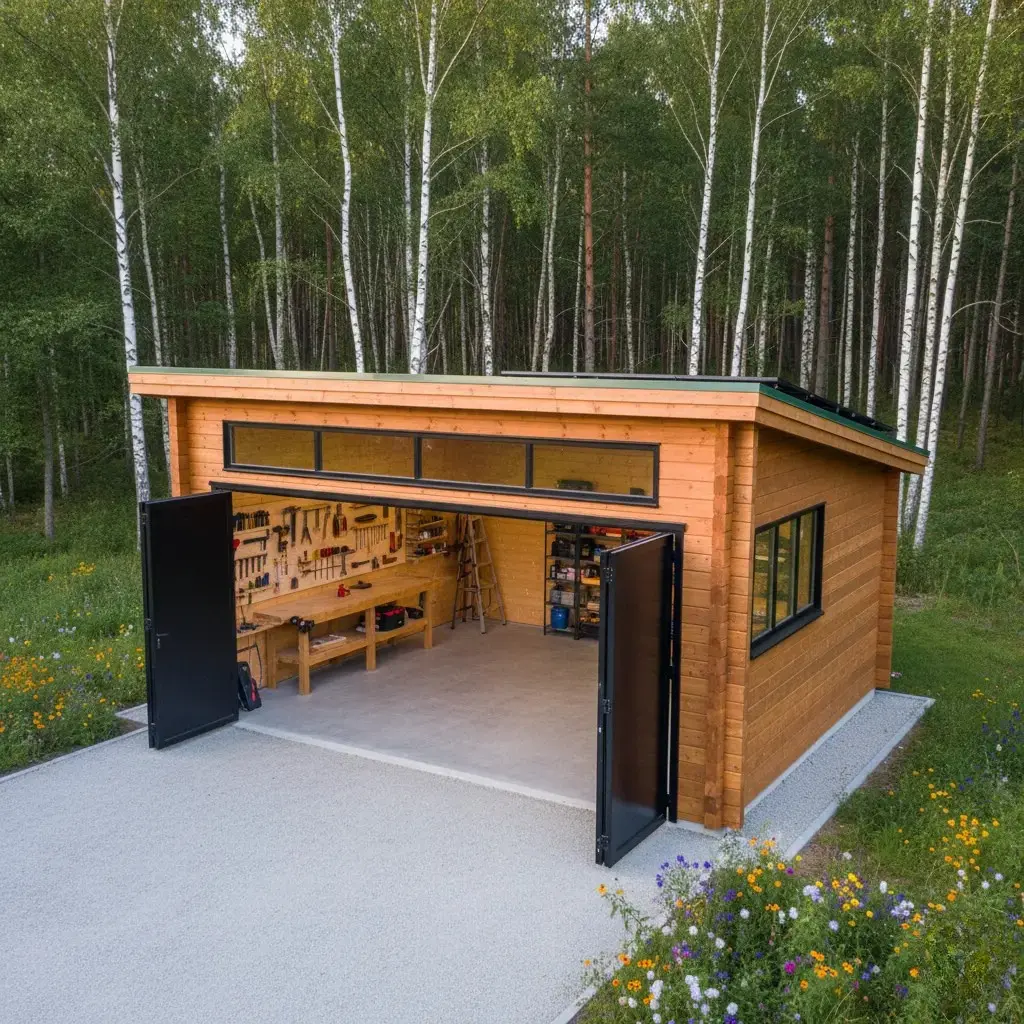
    At Chisel to Wood, we design and build bespoke timber garages and workshops across Greater London and Cambridge, from neat single bays with storage to multi-bay garages with integrated benches, power, lighting and insulation for comfortable use in every season. 


    Each building is tailored to your plot, access, vehicles and hobbies, then detailed for long-term durability and low maintenance.

    What we build (mix, match, and scale)

    • Single Bay Garages: space-efficient footprints with smart storage, personnel door, lighting scenes and weather-tight thresholds.
    • Double & Multi-Bay Garages: clear spans for larger vehicles, classic twin doors or single wide opening, concealed gutters and tidy eaves.
    • Insulated Workshops: year-round comfort for woodworking, bike builds or studio use; acoustic upgrades where neighbours are close.
    • Combo Layouts: garage + secured store; garage + heated workshop; workshop + office with internal connection.
    • Carports & Canopies: elegant covered parking with integrated downlights, ideal where planning height limits are tight.
    • Garden Machinery Stores & Cycle Rooms: racking, ground anchors, hose points, washable finishes.

    We’ll design proportions and openings that fit your site, align with your house, and make everyday use effortless.

    London projects (access, neighbours, conservation)

    Building in London means tight access, close neighbours and high expectations


    We regularly work in Richmond, Wimbledon, Chiswick, Hammersmith & Fulham, Hampstead, Camden, Islington and Chelsea, planning street-front deliveries, protecting routes and sequencing works to keep disruption low. 


    Designs consider overlooking, acoustic breakout and night lighting from day one. In conservation areas or near listed buildings, we use calm forms and warm timber cladding that read as craft, not pastiche — and we’re comfortable supporting planning dialogue with clear drawings and material samples.

    Cambridge projects (performance, village context)

    In Cambridge city and villages such as Histon, Girton, Trumpington, Shelford and Sawston, clients often prioritise robust performance with quiet aesthetics


    We deliver breathable fabric build-ups, standing-seam effect roofs, and claddings (larch, cedar, Thermowood or charred timber) that weather beautifully. 


    Workshops are tuned for draught control, task lighting, dust extraction provision and tool-friendly power — so the space stays useful, tidy and comfortable.

    Structure & envelope (why it feels solid)

    • Frame: engineered timber with structural sheathing for racking resistance; treated sole plates; precision fixings.
    • Base: reinforced concrete slab or screw-pile + cassette floor, chosen to suit ground conditions, loads and access.
    • Breathable envelope: ventilated rainscreen cavity, continuous insulation, inspected air barrier where appropriate.
    • Roofing: EPDM or standing-seam effect membranes with robust flashings, concealed gutters, generous eaves and drip edges.
    • Cladding: Thermowood, larch, cedar or charred timber; composite options on request; aluminium corners and sills to throw water clear.
    • Durability detailing: insect mesh, kicked flashings, separation from ground splash, replaceable wear layers at thresholds.

    This is the quiet engineering that makes a building feel reassuringly solid, stay dry and age with grace.

    Doors, security & weathering

    Your doors do most of the daily work — they must be smooth, secure and weather-tight.


    • Garage doors: insulated sectional, side-hinged timber, or sliding panels (project-specific). Automation optional, with manual override.
    • Personnel doors: secure, weather-sealed, with low thresholds and proper drip edges.
    • Ironmongery: high-security locks, stainless fixings, closers where appropriate.
    • Seals & thresholds: compressible seals sized to door type; threshold angles detailed to shed water and resist leaf build-up.
    • Security options: reinforced door frames, anti-lift hardware, alarm contacts and CCTV prep.

    Electrical & lighting (make work easier)

    • Lighting scenes: bright task lighting over benches; ambient for parking; night arrival scene outside; switch positions that make sense.
    • Power provision: plentiful sockets at bench height; 16A/32A circuits for machinery or EV chargers (with your installer); dedicated extraction points.
    • Data & controls: hard-wired data for smart chargers/cameras; simple, legible switches; sensor-based exterior lights that won’t glare at neighbours.
    • Backup & future-proofing: spare ways in the consumer unit; accessible trunking so changes don’t mean mess.

    Thermal comfort & acoustics (work year-round)

    Workshops are actually used when they’re quiet, warm and dry.


    • Insulation: continuous, with thermal bridges minimised; target U-values set to your budget and use.
    • Airtightness & ventilation: draught control for comfort; purge openings for fumes; optional mechanical extract over hot or dusty tasks.
    • Heating: efficient IR panels, UFH (electric) or compact air-to-air heat pumps sized to the envelope.
    • Acoustic upgrades: denser linings, internal partitions, door seals and glazing choices to reduce breakout noise.

    Organised interiors (so it stays tidy)

    • Benches & tool walls: hardwood tops, resilient edges, French cleats or shadow boards for fast access.
    • Storage: tall cabinets for chemicals/solvents; overhead racks; integrated cycle hooks; lockable compartments.
    • Floors: sealed concrete or durable LVT; fall management around wash points; easy to sweep and mop.
    • Zones: vehicle bay vs. clean bench; noisy cutting zone vs. assembly; lighting and socket layouts reinforce the plan.

    Car care & EV-readiness

    If car care is the main event, we design for:


    • Hose points and washable wall panels in wet zones.
    • Compressed air and power outlets positioned where you actually work.
    • Lighting angles that reveal swirls for detailing without glare.
    • EV conduit pre-runs and consumer-unit capacity ready for your charger installer.

    Planning & permissions (plain-English)

    Garages and workshops can fall under Permitted Development or require planning permission depending on height, position, use and context

    We’ll review your site and give a straightforward route:

    • PD basics: overall height, eaves height and boundary offsets are the big three; detached vs. attached matters.
    • Conservation/listed: expect design sensitivity; we supply clear elevations/sections, material samples and lighting notes.
    • Building Regulations: attached structures, proximity to boundaries, door fire performance and electrics can bring Regs into scope; we coordinate with independent inspectors so compliance is tidy and predictable.

    Sustainability (sensible choices that last)

    • Responsible timber and breathable assemblies.
    • Repair-friendly detailing: screws where future access helps, replaceable trims, accessible services.
    • Low-VOC finishes indoors; exterior treatments that can be renewed without stripping.
    • PV readiness or battery prep where you’d like to offset workshop loads over time.

    Project flow (so you always know what’s next)

    1. Discovery & concept: how you’ll use it, vehicle sizes, tools, storage; quick sketches and guide budget.
    2. Survey & coordinated design: levels, access, services; door choices, cladding and roof; lighting and sockets mapped.
    3. Permissions: PD confirmation or planning submission with concise statements and drawings.
    4. Build: base work; frame up; dry-in early; doors/windows; services; cladding and trims; interior fit-out.
    5. Handover & care: commissioning, snag clear, simple maintenance plan; optional annual or bi-annual check-ups.

    Pricing guidance (transparent ranges)

    • Single bay / compact workshop: typically £22k–£35k depending on doors, envelope and electrics.
    • Double bay / larger workshop: commonly £35k–£60k, spec-dependent.
    • Multi-bay or complex access: scoped case-by-case — we’ll propose phased options if helpful.

    After survey and a coordinated specification, we’ll issue a fixed quotation with clear alternates so you can dial features up or down.

    Maintenance & longevity (designed to stay good)

    Good detailing cuts maintenance, but timber outdoors still benefits from little and often:


    • Annual checks: gutters clear, outlets free, seals intact, fixings snug.
    • Re-oiling cycles: where appropriate; we’ll specify products and intervals.
    • Door care: seal checks, hinge lubrication, alignment tweaks after seasonal movement.

    We can bundle this into a care plan with photo reports and minor works.

    Areas We Cover

    London: Richmond, Wimbledon, Chiswick, Hammersmith, Fulham, Hampstead, Camden, Islington, Chelsea and neighbouring districts.


    Cambridge & villages: Cambridge city, Histon, Girton, Trumpington, Shelford, Sawston and surrounding areas. 


    Slightly outside? 


    Ask — if access and programme make sense, we’re flexible.

    FAQs – London  & Cambridge Garages & Workshops

    Can you match doors to an existing house style?

    Yes. From modern aluminium sectional doors to timber side-hinged sets with traditional proportions, we’ll propose options that sit comfortably with your elevation.

    Will it be warm enough to work in winter?

    If you choose an insulated workshop spec, absolutely. We design for insulation continuity, draught control and right-sized heating so comfort is stable.

    Can you integrate dust extraction and compressed air?

    Yes — we’ll plan duct routes, isolation switches and hose points, and leave access for future upgrades.

    Do I need planning permission?

    Sometimes. It depends on size, height, position and context. We’ll advise the cleanest route and, if needed, handle drawings and submissions.

    What’s the typical on-site duration?

    After design and procurement, most single bays and compact workshops are 1–2 weeks on site; larger/multi-bay projects run longer. Prefabricated sub-assemblies can shorten time and reduce noise.

    Ready to Build Something Extraordinary?

    Ready to plan a garage or workshop that works as hard as you do? 


    Send your vehicle sizes, intended uses, any photos/plan and your postcode. 


    We’ll come back with concept options, guide pricing and the likely permissions route.